
APPLICATIONS / CHEMOSTAT
What is a Chemostat?
A chemostat is a continuous culture system designed to maintain microbial cells at a constant growth rate through the constant, controlled addition of fresh culture media and simultaneous removal of cells, products and waste metabolites.
Commonly, a nutrient of interest will be supplied to the culture at a growth limiting concentration with others supplied in excess as described by Novick & Szilard in 1950 [1] which makes the growth rate of the culture proportional to the media feed rate and controllable for long periods of time.
1 – Novick A, Szilard L. Description of the chemostat. Science (New York, N.Y.). 1950 Dec;112(2920):715-716.
Why use a Chemostat?
A chemostat provides a powerful way to control the physiological state of cultures, enabling experiments that require microbes at specific states to be studied more reproducibly than in batch cultures where the availability of nutrients, products and waste metabolites can fluctuate significantly across the culture confounding metabolic and/or gene expression studies.
A chemostat can also be used to evolve cells. For example, maintaining a very low level of glucose in the media will select for those cells that are more efficient at using glucose.
Many experiments require microbes that are at very well defined and controlled growth states, such as studies into;
- Microbial physiology and growth kinetics
- Transcriptomics, proteomics and metabolomics
- Adaptation and evolution under a defined selection pressure (see also the morbidostat application page for adaptive laboratory evolution (ALE) and directed evolution (DE) experiments)
- Enhancing organisms with particular metabolic capabilities
- Microbial communities and environmental processes
- Optimising conditions for batch, fed-batch, or continuous industrial processes
- Continuous production of biomass, enzymes, chemicals, fuels, proteins or biomaterials
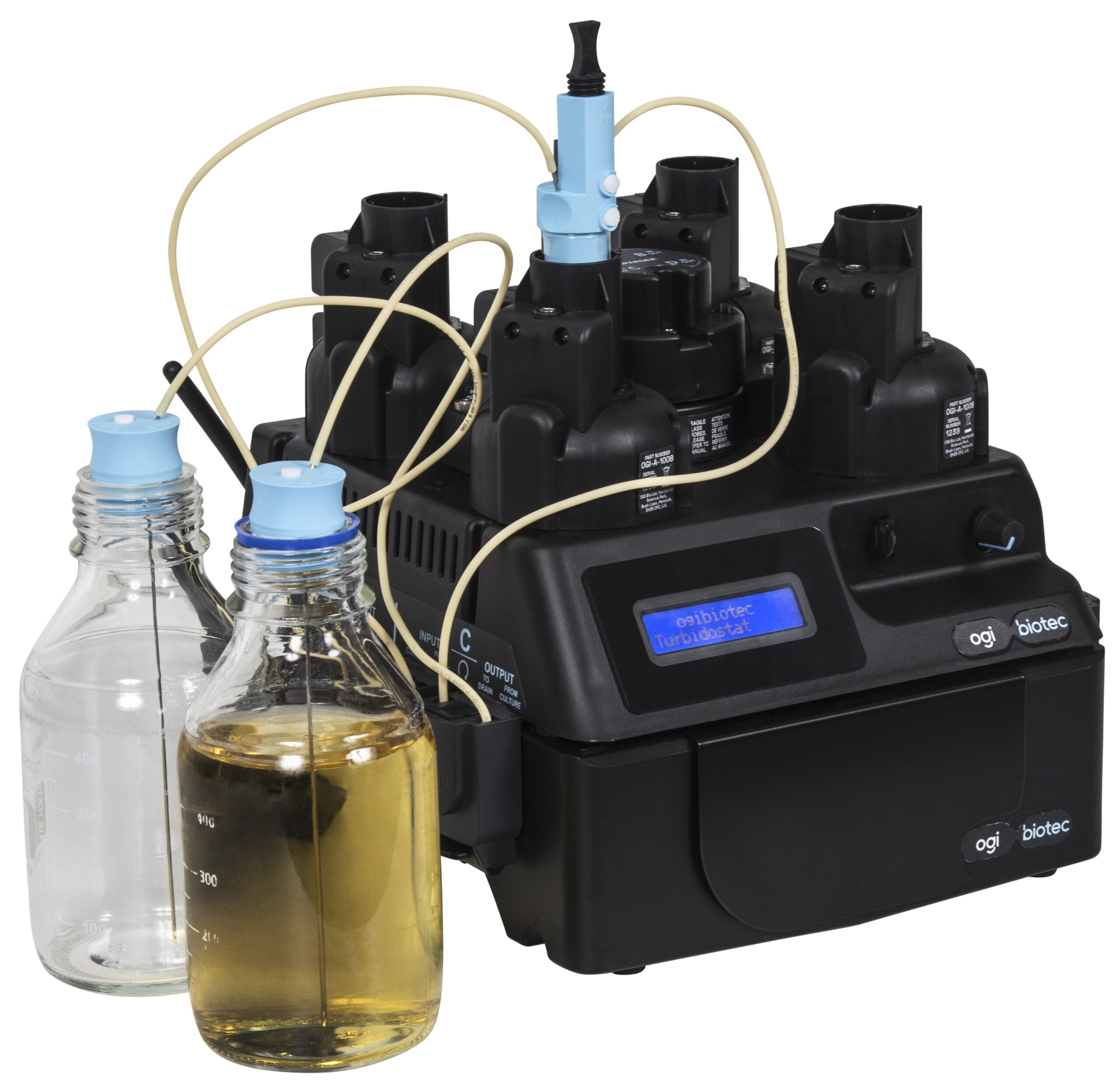
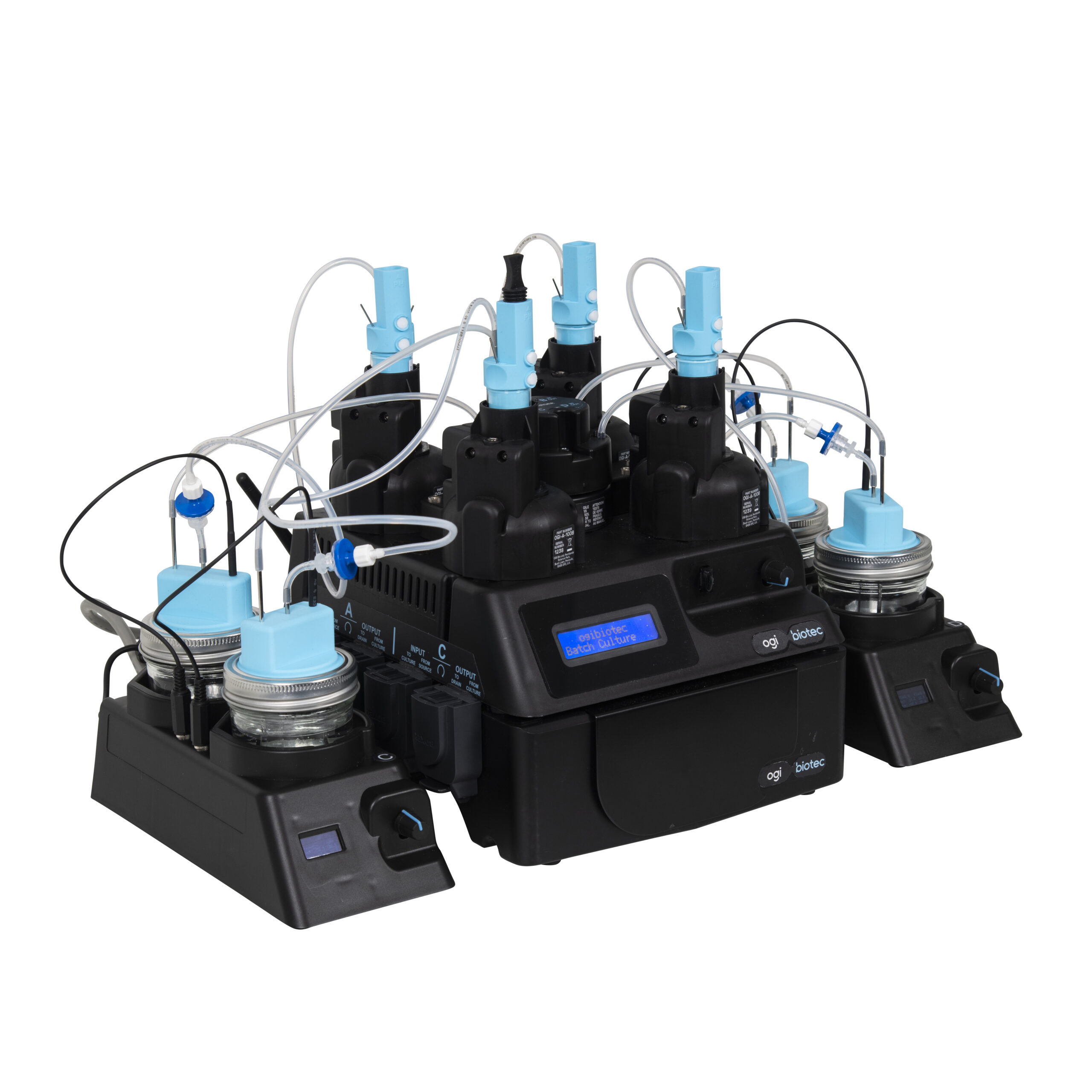
Ogi3 enables 4x 15 mL chemostatic experiments to be performed in parallel with independent dilution rates.
An alternative is to employ a larger-scale bioreactor system but these are typically complex and costly to use.
Ogi3 completely automates the running of up to four parallel but independently configured chemostatic cultures in only 15 mL culture volumes minimising the costs and time involved.
How does a chemostat work?
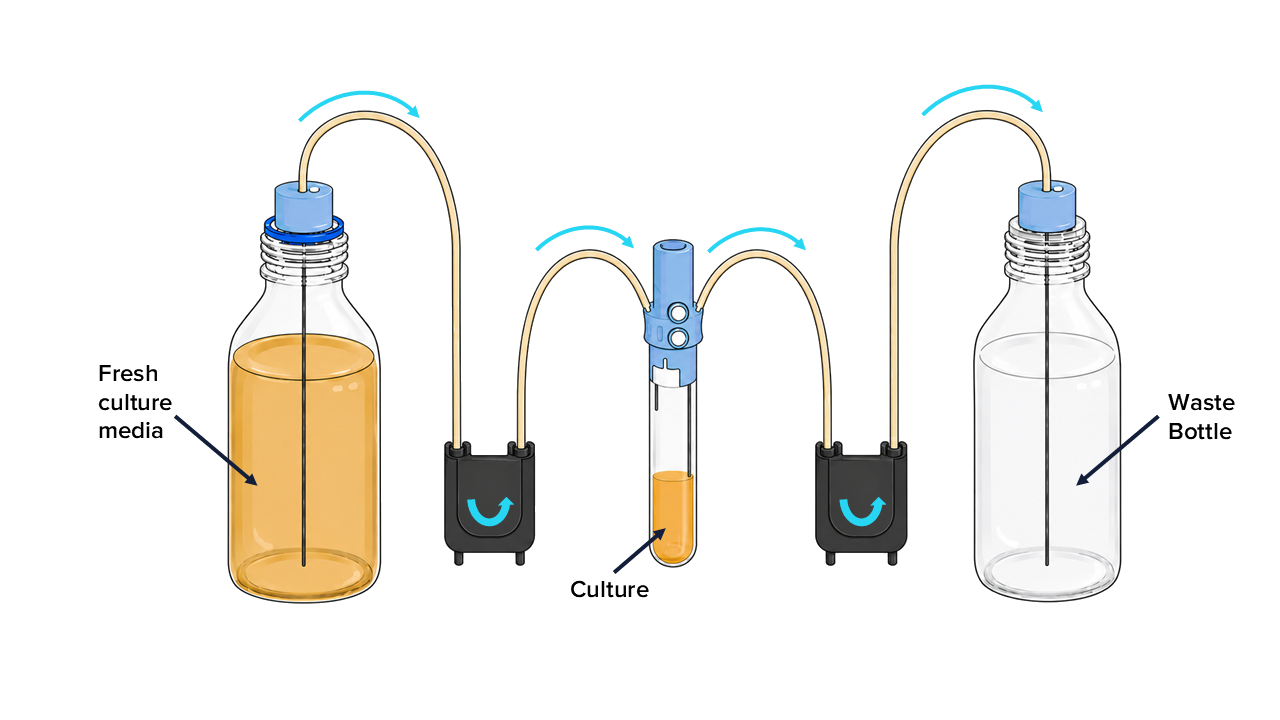
In the standard chemostat configuration each Ogi3 Reactor Flask is connected to two 500 mL laboratory bottles, one containing fresh culture media, e.g. LB, and the other being for removed ‘waste’ culture material, using lengths of peristaltic pump tubing and Media/Waste Stoppers.
When an experiment is configured a dilution flow rate is defined for each of the four reactor flasks in the system. The Liquid Control Module pumps will then supply fresh culture media to the cultures at the specified rate while removing excess volume which dilutes the culture while maintaining a culture volume of 15 mL in the reactor flask.
Chemostat + pH Control
If an Ogi3 pH Module is installed then pH controlled chemostatic experiments can be performed. The diagram below shows how this is be achieved by including a bottle containing an acid or base. In this mode the pH will be measured as frequently as every 3 minutes and as the pH moves from the setpoint the acid/base pump will be activated to dose the culture and the pH immediately re-measured and the culture re-dosed with acid/base as needed until the target pH is achieved.

Chemostat Case Study
In the 2009 paper ‘Oscillations in continuous culture populations of Streptococcus pneumoniae: population dynamics and the evolution of clonal suicide’ Cornejo et al (2009, Proc. R. Soc. B. 276: 999–1008) discovered that S. pneumoniae monocultures failed to achieve a stable density. Instead, the bacterial population repeatedly grew and collapsed, with viable-cell density changing by as much as five orders of magnitude and with cycles of roughly 30 hours.
The chemostat experiment revealed a striking, previously unanticipated population dynamic: high-density pneumococcal monocultures repeatedly destroy much of their own population through an unidentified extracellular proteinaceous activity. The paper convincingly showed that the phenomenon was reproducible across laboratory and clinical strains, involved genuine cell lysis
The data below shows a recent experiment where the original experiment was repeated with two different lytic strains of S. pneumoniae together with a knockout strain as a control.
The plot shows to original experiment performed by Cornejo et al. in which S. pneumoniae was cultured in home-made chemostats incubated in a water bath. Each chemostat vessel contained 20 ml Todd–Hewitt broth plus yeast extract, which was inoculated with 100 μl S. pneumoniae at OD~0.3 and cultured at 35°C with agitation and aeration achieved through the bubbling of sterilised air through the culture. Fresh medium was supplied to the culture, and culture volume removed, at 2 ml per hour, corresponding to a dilution rate of approximately 0.1 h⁻¹. 500 µl samples were manually removed from the chemostats for analysis.
The plot shows the cyclical growth and decline of the culture as measured in colony forming units (CFU) with the authors noting that the dramatic oscillations were also apparent as changes in optical density (OD620) providing evidence that the cell death was due to the bacteria lysing.
The authors proposed that the evolutionary purpose of the self-killing system might be allelopathy—protecting an established pneumococcal population from invasion because competitors could be more sensitive to the toxin than the producer. The model demonstrated that such a toxin could prevent invasion under some conditions, even when the invading strain had a higher intrinsic growth rate. This ecological role was nevertheless not directly tested experimentally in the paper.
We were invited to demonstrate the chemostat function of Ogi3 by replicating this original experiment. With only 28 hours available to perform the experiment the three S. pneumoniae cultures were quickly established using the growth conditions of the original experiment, with the exception of agitation/aeration as the Sparging Module was not released at the time of the experiment. The cultures were grown for 28 hours.
The plot shows the two lytic strains following the expected cycle of growth -> death -> growth, replicating the original experiment. In this instance, the OD measurements were automated with a data point collected every 5 minutes without human intervention or sample removal for the duration of the experiment providing a rich and uninterrupted dataset.
Reference
Omar E Cornejo, Daniel E Rozen, Robert M May, Bruce R Levin; Oscillations in continuous culture populations of Streptococcus pneumoniae: population dynamics and the evolution of clonal suicide. Proc. R. Soc. B 1 March 2009; 276 (1659): 999–1008. https://doi.org/10.1098/rspb.2008.1415


Want to find out how you could use a chemostat?
What else can an Ogi3 do?
Bang-Bang Turbidostat
Automate the process of generating growth curves by repeatedly growing cells across a defined portion of their growth curve under repeated or varied conditions.
Turbidostat
Hold your culture at the required point in their growth for your experiments with high frequency OD measurement and automated dilution
Morbidostat
Automatic and dynamic stressing of cells for Directed Evolution (DE) / Adaptive Laboratory Evolution (ALE) experiments
Batch Culture
Automate the experiments you’re doing in shake flasks with the added real time analytics and control you need to get robust datasets with minimal hands-on time to maximise your productivity.
Build the perfect OGI3 for your experiments
OGI3 Bioreactor
Four independent bioreactors with precise control over stir speed, temperature, and optical density measurements.
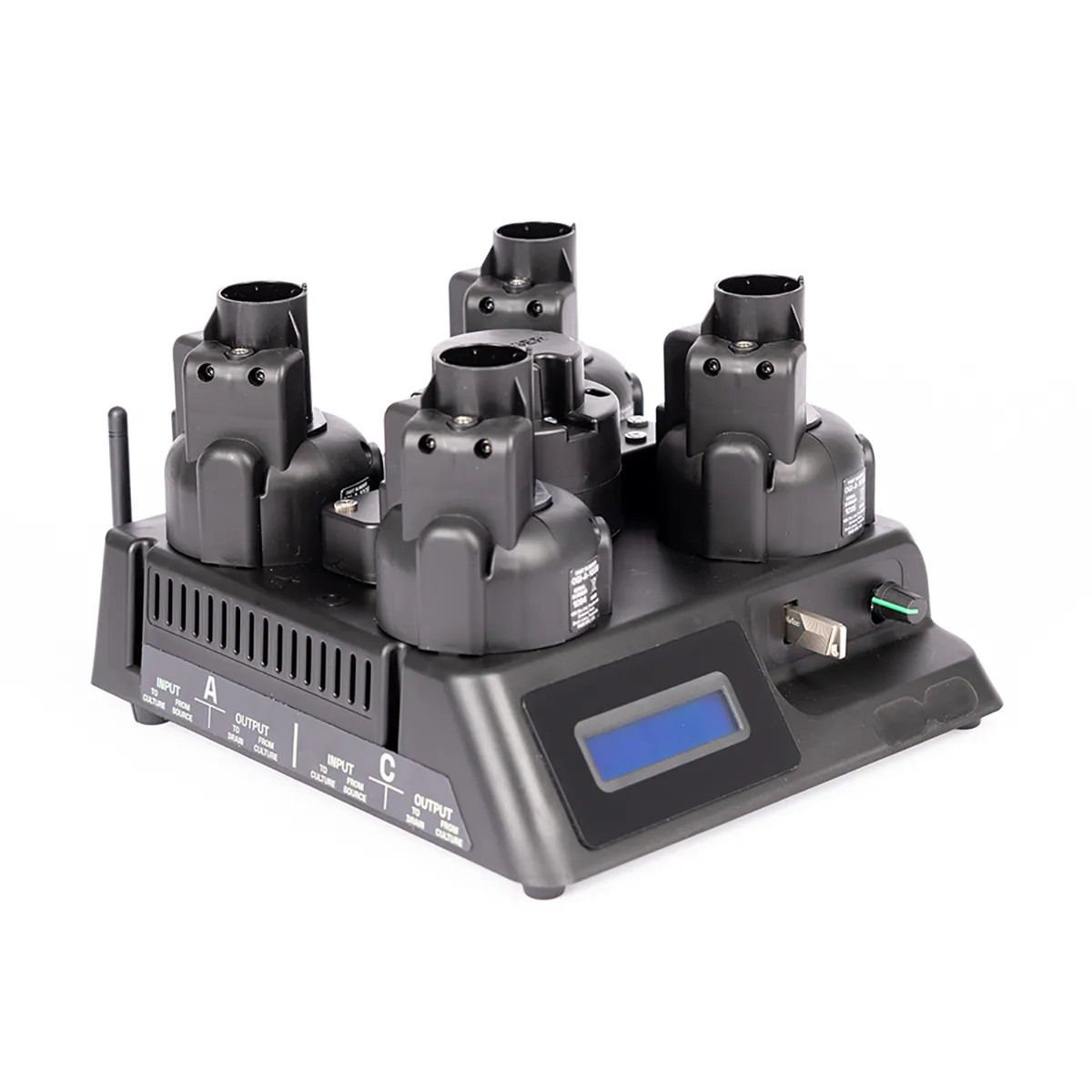
Liquid Control Module
Effortlessly manage your liquid cultures with ogibiotec’s liquid control module.

Fluorescence Module
Enables real-time full spectrum scan of 340 to 780 nm in 2 nm increments.

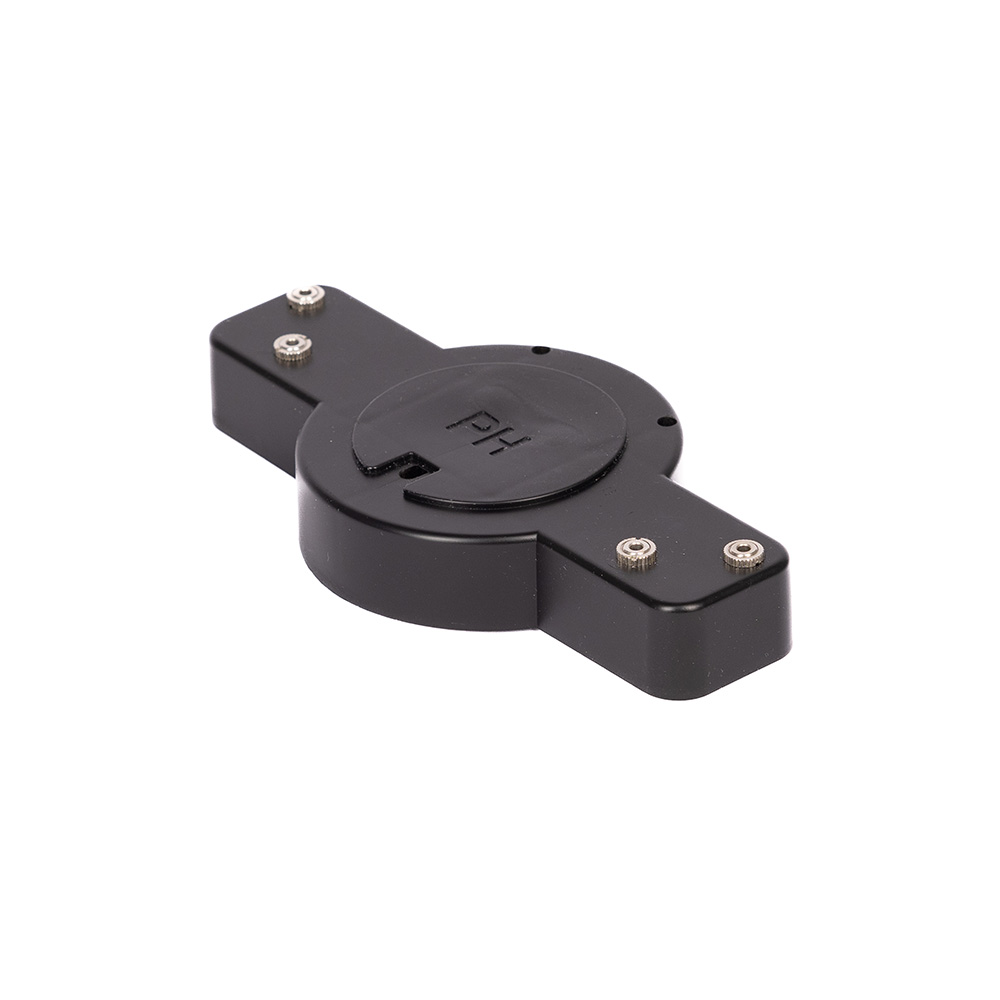
pH Module
Monitor the pH in each culture. Ogi3 pH probes to allow the accurate measurement of pH 0-14.
Dissolved Oxygen Module
Measure the concentration of Oxygen in your cultures in real time.

Sparging Module
Provide additional gas to your cultures via headspace or dip-tube sparging. Supplied with pre-humidification units.
NB: Images not to scale